Which Bird Are You?

Early Bird Or Night Owl?

Monday, May 9, 2016

8 Tips for Better Sleep

image


8 Tips for Better Sleep


As a society we’re a little obsessed with sleep – wondering how much we need, worried that we’re not getting enough, and wishing for ways to get more, or better, shut-eye. Although studies don’t always agree on how many hours of sleep is ideal, most experts say that you should aim for at least seven hours of sleep most nights.
Sleep is important for our physical well-being, helping to boost immunity, prevent weight gain, and stave off disease. In fact, a study published in the journal Science suggests that while we are asleep, the brain quite literally cleans itself – flooding with cerebrospinal fluid that flushes out cellular waste and toxins, as well as possibly preventing diseases like Alzheimer’s and Parkinson’s. A growing body of research also indicates that sleep is crucial for mental health, and that getting insufficient sleep can lead to mood disorders and depression.
It’s clear that sleep can play as big a role in your health as your diet, exercise, and medication regimen, so take it just as seriously. To ensure you get enough quality sleep to stay healthy, read up on these eight tips for improving your slumber:
“Whether you’re an “early bird” or a “night owl,” sleep experts say that respecting your hard-wired preference optimizes sleep, waking, and energy levels.”
Understand your wiring. Whether you’re an “early bird” or a “night owl,” sleep experts say that respecting your hard-wired preference optimizes sleep, waking, and energy levels. In other words, don’t try to force yourself to stay up late or get up early, if it’s a struggle. Of course, if you’re a night owl who has to be at work at 9:00 am, you can’t sleep in until 8:30 am. But don’t schedule a gym session for 6:00 am if you know you won’t be able to get to sleep until midnight, and don’t stay up until midnight catching up on work if you’re an early bird who wakes up at the crack of dawn every day.
Stop sleeping in. As tempting as it is to doze until lunch on the weekends, making it a habit can throw off your sleep the rest of the week. Sleep experts say that sticking to a regular bed and wake times makes it much easier to fall asleep. Staying up late during the week and then sleeping in on the weekends creates what some experts have dubbed “sleep jet lag.”
Get moving. Among the many health benefits of exercise, a workout helps you fall asleep more easily and sleep more soundly at night. Just don’t exercise too close to bedtime, as that will boost your body’s cortisol levels and make it harder to doze off.
Lay off devices before bed. The blue light emitted by smartphones, laptops, and tablets suppresses melatonin production in the brain, which means that looking at these screens before bed makes it harder to sleep, and sleep well. Turn off your devices at least an hour before bedtime to read a book or watch TV – television doesn’t emit the same blue light as tech screens. If you can’t kick your laptop out of bed, wear amber-tinted glasses designed to block blue light, like those made by Gunnar (they’re better looking than you might think).
“While one or two alcoholic drinks probably won’t disrupt your sleep, more than that will lead to lower quality sleep — and maybe 3:00 am insomnia — as your body processes the alcohol.”
Stick to water. Caffeine and alcohol can both reduce sleep duration and quality. Avoid caffeine in the late afternoon, and limit boozy beverages too. While one or two alcoholic drinks probably won’t disrupt your sleep, more than that will lead to lower quality sleep — and maybe 3:00 am insomnia — as your body processes the alcohol. Drinking earlier in the evening is also less of a problem than a pre-bed “nightcap.”
Nap if you can. It’s normal to feel a dip in energy between around 2:00 and 4:00 in the afternoon. Despite conventional wisdom, it has nothing to do with whether or not you had a big lunch. If you feel exhausted in the afternoon, the best thing to do is grab a 15-30 minute nap if your work allows. But be sure to set an alarm so that you don’t sleep for longer than 45 minutes or so — a nap that lasts longer than that is likely to leave you feeling groggy and worse off than no nap at all.
Recognize sleep apnea. Sleep apnea, a condition in which your breathing is shallow or irregular during sleep, can have serious health consequences but is under-diagnosed. In addition to snoring, the symptoms include morning headaches, memory problems, irritability and depression, frequent waking, and feeling tired during the day – even though you received adequate hours of sleep. It’s especially hard to recognize sleep apnea of you live by yourself and don’t have anybody to alert you to your snoring. If you chronically snore or experience the symptoms described above, talk to your doctor about sleep apnea diagnosis and treatment.
If you’re still awake, seek help. If it regularly takes you longer than a half hour to fall asleep, if you wake up for long periods in the middle of the night, or if you never feel rested, you should seek help from a doctor with expertise in sleep medicine. There are many therapies available for sleep disorders, including light therapy, supplements like melatonin, behavior modification and prescription medications.

How do you make sure you get a good night’s sleep?
Let us know on the Mango Health Facebook page by this Friday - one lucky commenter will win a free organic and natural mattress, courtesy of Nest Bedding!

If you liked this post, you may also like:
Sleeping Better with my Mango Wish
6 Tips to Keep Your Brain Fit
Med Ed: Understanding Alternative and Integrative Medicine

The posts on this blog are for information only. They are neither intended to substitute for a relationship with your doctor or other healthcare provider, nor do they constitute medical or healthcare advice of any kind. Any information in these posts should not be acted upon without consideration of primary source material and professional input from one’s own health care providers.


Link: http://blog.mangohealth.com/post/131956223477/8-tips-for-better-sleep


Getting a Good Night's Sleep


I’ve written about remodeling and home products for 15 years, the last 8 with Consumer Reports. When I'm not covering the subjects for work, I’m putting the knowledge to use on the renovation of a Brooklyn brownstone, where I live with my wife and kids. You can also find me most weeks on the soccer field.


How to Clean

Tackling this five-step chore a couple times a year can help keep things fresh in the bedroom


You spend about a third of your life on your mattress. When was the last time you gave it a good, deep clean? The seldom-used living room sofa probably feels the bristle of a vacuum brush more often than your trusty mattress. It’s time to change that. Besides promoting a more pleasant and productive night's sleep, a clean, cared for mattress can last longer—and it might even help prevent nasty, not to mention costly, pest infestations.

Back when most mattresses could be flipped over, the conventional wisdom was that you should turn it twice a year, and take that opportunity to clean it as well. These days, a lot of mattresses, including the pillow-top variety, can’t be turned because they have a proper top and bottom. But cleaning your mattress two times a year remains a good rule of thumb. (Check the mattress label for instructions since the manufacturer might recommend rotating the mattress head to foot to ensure even wear.)

Step 1

Start the cleaning process by stripping the mattress of all sheets and bedding and tossing the items in the wash. To remove tough stains, always use a Consumer Reports top-rated laundry detergent and the hottest water setting on your washing machine; dry on high heat as well to zap any surviving critters.

Step 2

Next, vacuum the entire mattress surface with the upholstery attachment on your vacuum cleaner. Pay attention to seams and crevices, where dirt, dust, dead skin, and other icky stuff collect; switching to your vacuum’s crevice attachment can help get in deep.
Our tests have found that a normal vacuum cleaner provides capable cleaning, but if you’re fastidious, consider investing in the Dyson V6 Mattress Handheld Vacuum, a $250 device designed specifically for the job. In a Consumer Reports at-home mattress test, we cleaned half of a foam Tempur-Pedic mattress with a top-rated canister vacuum and half with the Dyson handheld. The Dyson sucked up 3 grams of material, including dead skin cells that dust mites like to nosh on, compared with the 1 gram that our regular vacuum removed.

Step 3

Once you’re finished vacuuming, check for stains and spot treat them with an appropriate cleaner. An upholstery cleaner or enzyme-based pet-odor remover can do the job on many bodily fluids. You can also try a simple solution of 1 teaspoon mild dish detergent and 1 cup of warm water.

Step 4

Next, deodorize the mattress by sprinkling baking soda over the entire surface. Especially if this is your first cleaning, don't be afraid to empty an entire 1-pound box onto the mattress. For best results, leave the baking soda there for 24 hours. That means you might need to plan the project around an overnight trip—or be willing to sleep elsewhere in your home. If you can place the mattress near a window, the sunlight will add its sanitizing power.

Step 5

After the baking soda has had a chance to tackle odors, go back over the mattress with your vacuum’s upholstery attachment. If you don't already own a mattress cover, we recommend buying one. And adding a mattress pad between the cover and bottom sheet will help absorb moisture. Along with the periodic deep cleaning described here, these extra layers of protection will help prevent mites, fleas, and other pests from sharing your bed. That should really help you sleep tight.

Link: http://www.consumerreports.org/mattresses/how-to-clean-a-mattress/


Arianna Huffington’s Fight Against Sleep Deprivation

CREDIT: Star Max/IPx
Arianna Huffington at The Time 100 Gala.


Education

Arianna Huffington’s Fight Against Sleep Deprivation


It probably doesn’t come as a surprise to most people that college students aren’t getting enough sleep. Sleep deprivation is part of campus culture, and falling asleep while cramming for an exam is supposed to be just another night in the life of a college student.

Fifty percent of college students report daytime sleepiness, and 70 percent of college students report having an insufficient amount of sleep, according to 2014 paper by University of Michigan researchers. Instead of giving students more time to get things done, this lack of sleep puts students at increased risk of academic failure and compromised learning. Moderate sleep deprivation has also been shown to be equivalent to being intoxicated by alcohol. After 17 to 19 hours without sleep, performance on tests was equivalent or worse than if a student had a blood alcohol level of 0.05 percent, with response speeds being 50 percent slower than normal for some tests.

That’s why Arianna Huffington, co-founder and editor-in-chief of The Huffington Post, decided to tour college campuses across the country to promote her new book, The Sleep Revolution: Transforming Your Life, One Night at a Time.

Huffington knows the dangers of sleep deprivation from firsthand experience. In 2007, back when she says she was regularly working 18-hour days, she passed out and fell in her home. When she came to, she was laying in a pool of blood and had a broken cheekbone. The doctor told her exhaustion was the reason for her fall. Since then, she’s been working to change her lifestyle and convince others to do the same.

Huffington spoke with ThinkProgress about how campus culture and economic inequality contribute to the prevalence of sleep deprivation among college students specifically.

ThinkProgress: In the book, you mention how our smartphones and constant connection to work and school cause anxiety that prevents us from sleeping well. How much is technology a factor in our inability to fall asleep?

SLEEP REVOLUTION COVER - HI RES FINAL

Arianna Huffington: It’s pretty conclusive that being hyper-connected to work all the time, and smartphones makes it much more difficult to disconnect, makes it more difficult to go to sleep. Even if we’re exhausted and we fall asleep, our brain will wake us up in the middle of the night, so it’s about navigating our relationship with technology but I think we also need to change our minds about the importance of sleep. Because even though we’re going through a cultural shift at the moment, sleep at many workplaces is devalued and even scorned and sleep deprivation is still being worn like a badge of honor. So we first need a cultural shift to make it much easier for people to make the changes that are necessary for people to get good sleep that dramatically improves health, decision-making, our relationships, and our own happiness.

TP: During these visits, does it seem like universities are taking this seriously as well as students?

AH: Every school has scholarships and support but you know, up to 40 percent of low-income students who were accepted to college couldn’t make it to the first day of school in the fall, due to tuition sticker-shock, but here is what I believe. When we take care of ourselves and again, this is scientifically-based, we become more resilient when we’re fully recharged. So a lot of mental health issues like anxiety that get in the way of us taking risks and doing our work, and let me just address again, this is not an alternative to policy change. But in the meantime, how we act within the current environment depends a lot on our own resilience and sleep deprivation is very connected to lack of resilience, to anxiety, to depression, all these things that get in the way of achieving our goals as a college student.

TP: When it comes to colleges, is there something that a university president or professors can do to emphasize the importance of sleep?

AH: I think the first step is bringing awareness of the new science, what is happening to the brain when we sleep, how it affects decision-making and leadership, and how it affects health. Also the reason we are doing this college tour is to raise awareness. You can see students who are beginning to change their relationship with sleep because students have a saying — grades, social life, sleep: Pick one. And sleep is the one that gets sacrificed.

TP: How much of the cultural tendency to brag about lack of sleep is gendered and centered on this macho idea that you can be tough enough to deal with lack of sleep?

AH: Absolutely, it’s machismo. I think it starts with men using it as a symbol of virility almost. But then a lot of women who think it’s how to get ahead in the workplace have adopted it. It seems primarily a machismo thing, like whose is bigger? And I think now when we have some new role models including Jeff Bezos and Satya Nadella, CEO of Microsoft, and Mark Bertolini, CEO of Aetna, who introduced this program, where Aetna employees can track their sleep and if they get seven hours or more they get $25 a night. Besides the financial reward, it’s a huge shift in terms of recognizing and prioritizing sleep. That message is coming from the top of the corporation, coming from the CEO. It’s shows the connection between sleep deprivation and the bottom line — how it affects both health care costs and productivity.

TP: What do you think can be done policy-wise to acknowledge the economic part of this, since some students are working part-time jobs and can’t make time for sleep?

AH: I would say on the college level, it’s the college loan system, and many college students have to have a job and go into debt to make ends meet, and then of course there is the fact that we have the emergence of financial worry about repaying all of these heavy loans. The 2014 graduates had the highest student loan debt ever,* so that is another factor, that burden on students. Often, then on top of it, you have calamity of for-profit colleges, which has made it even harder, so as a country these are factors we have to address. So I think there are structural issues and policy issues, but while we are working to change policies around college loans and for-profit colleges, we need to change our relationship with technology and our prioritization of sleep so we don’t damage both our health and our grades, because cognitive performance is impaired when you’re sleep-deprived.

TP: Once people graduate, they’ll also be dealing with a culture of burnout in many workplaces. Do you think employers are beginning to see how sleep deprivation is bad for productivity when they see that the effects of being sleep deprived at work is similar to the effects of being intoxicated at work?

AH: That is really a belief that we are working to accelerate. There is leadership happening, but like any transition, you have multiple factors co-existing. You have the behaviors of executives and professors congratulating students for working 24/7 and you also have an explosion of new scientific findings showing how detrimental this is, to our grades, to our career success at any level, and we also have athletes that college students revere in many instances who are ahead of us in terms of prioritizing sleep as a performance enhancer, such as LeBron James, for example.

TP: Has the discussion of students taking stimulants come up during the tour?

AH: Yes, that’s a huge problem. Yes, I think with the addiction to Adderall and the addiction to energy drinks, we have a seen a bubbling up of emergency room visits and so I think we see a lot of these problems are magnified in order to basically counteract lack of sleep and get around sleeping.

TP: And then the body gives in eventually and people go to the hospital, similar to your fall a few years ago.

AH: That is exactly what is happening and now we see you know a perfect storm of recognizing the dangers of sleep deprivation, in terms of executives collapsing on stage, and we see what’s happening in colleges with an increase in mental health problems, which is connected to sleep deprivation. I was at the Stanford Graduate School of Business last week and they were telling me about all the health problems they’re facing in terms of students getting meningitis and whooping cough, so we’re talking about the impact of sleep deprivation on our health and ultimately our productivity, because we are taken off the grid until we recover.

*Now 2015 is the most indebted class ever, according to an analysis by Edvisors.com. The percentage of students graduating with debt is about the same as last year, however.


Link: http://thinkprogress.org/education/2016/05/02/3773115/college-sleep-deprivation/


Wednesday, April 27, 2016

Mindful Awareness

UCLA Mindful Awareness Research Center

Mindfulness is making the news these days. It has been depicted in the media primarily as a tool to hone attention, to cultivate sensory awareness, and to keep us in the present moment.

Developing these tools takes effort and determination, but why is it we can sometimes be mindful without really even trying? Perhaps we were naturally mindful at points in life before we ever learned what mindfulness was. Maybe we feel naturally connected, present, and at ease in nature. Or we become mindful while talking authentically with a friend, or in the midst of music, art, or athletic activity.

Mindfulness is not only a meditation technique, but also a state of being. This state is available to anyone; it is a natural human capacity. Mindfulness practice, as a tool, is tremendously helpful to cultivate this awareness, and the state can arise at any moment. Mindfulness is also connected to a set of powerful outcomes: happiness, emotional regulation, compassion, altruism, and kindness.

We encourage you to attend an array of offerings to cultivate the moment-to-moment awareness, which is the foundation of our practice.


 Link: http://marc.ucla.edu/

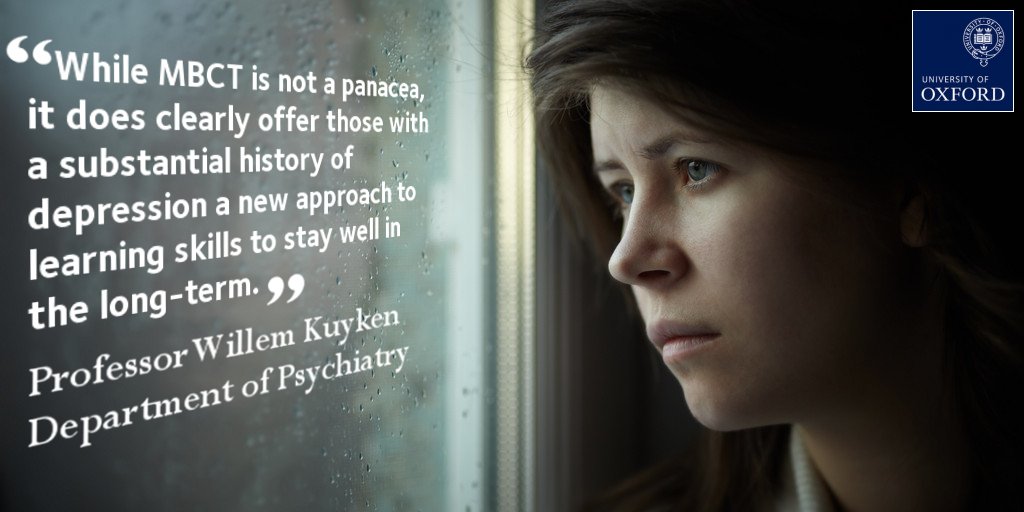
Mindfulness-based cognitive therapy can help prevent recurrence of depression.


Review finds mindfulness-based cognitive therapy can help prevent recurrence of depression.

Friday, April 22, 2016

Half-brain Sleeping

Half Your Brain Stands Guard When Sleeping In A New Place

Part of your brain doesn't sleep as deeply when you're in a new place.
parema/Getty Images 


When you sleep in unfamiliar surroundings, only half your brain is getting a good night's rest.

"The left side seems to be more awake than the right side," says Yuka Sasaki, an associate professor of cognitive, linguistic and psychological sciences at Brown University.

The finding, reported Thursday in the journal Current Biology, helps explain why people tend to feel tired after sleeping in a new place. 

And it suggests people have something in common with birds and sea mammals, which frequently put half their brain to sleep while the other half remains on guard.

Sleep researchers discovered the "first-night effect" decades ago, when they began studying people in sleep labs. The first night in a lab, a person's sleep is usually so bad that researchers simply toss out any data they collect.

But Sasaki wanted to know what was going on in the brain during that first night. So she and a team of researchers studied the brain wave patterns of 35 Brown University students.

The team measured something called slow-wave activity, which appears during deep sleep. And they found that during a student's first night in the lab, slow wave activity was greater in certain areas of the right hemisphere than in the corresponding areas of the left hemisphere.

After the first night, though, the difference went away.

To confirm that the left side of the brain really was more alert, the team did two other experiments. First, they had the sleeping students listen to a repeated standard tone followed by a single tone of a different pitch.

When someone is awake or sleeping lightly, the brain responds to this "deviant tone." And the students' brains did respond — but only on the left side.

Then the researchers played a sound loud enough to wake someone who was sleeping lightly. And they found that students woke up faster when the sound was played into the right ear, which is connected to the left side of the brain.

The ability to rest just one side of the brain has never been demonstrated in people before, says Niels Rattenborg, leader of the avian sleep group at the Max Planck Institute for Ornithology in Seewiesen, Germany. But he says it's a trick many animals can do.

"We've known for quite a while that some marine mammals like dolphins and some of the seals as well as many birds can sleep with one half of the brain at a time," he says.

A few years ago, Rattenborg did an experiment with ducks that suggests at least one way in which half-brain sleeping provided an evolutionary advantage. The experiment involved putting ducks in a row, literally, and watching them sleep.

Rattenborg found that ducks with a bird on either side of them put their entire brain to sleep and kept both eyes closed. "However, the ducks at the end of the row slept more with one half of the brain at a time," he says. "And when they did that they directed the open eye away from the other birds, as if they were looking for approaching predators."

Predators aren't a big problem for people these days. But the human brain was shaped during a time when nights were dark and full of terrors, Rattenborg says.

"When we're sleeping in a new environment and we don't know how many predators are around," he says, "it would make sense to keep half the brain more alert and more responsive to bumps in the night."

Sasaki says that brain response is involuntary and there's nothing people can do to prevent it, even if they've just flown in for a big presentation the next morning. So lots of coffee the next morning.


Link: http://www.npr.org/sections/health-shots/2016/04/21/474691141/half-your-brain-stands-guard-when-sleeping-in-a-new-place?utm_campaign=storyshare&utm_source=twitter.com&utm_medium=social#


Monday, April 11, 2016

Sleep Deprived: The Sleep Revolution by Arianna Huffington


Sleep Deprived: We're Recharging Our Phones, But Not Ourselves


Your Health

Sleep Deprived: We're Recharging Our Phones, But Not Ourselves

NPR Staff 
 
 
Millions of Americans recharge their phones, screens and laptops before they go to bed at night, but do they recharge themselves?

Arianna Huffington, co-founder and editor in chief of The Huffington Post, says we are in the midst of a sleep-deprivation crisis that creates anxiety, as well as exhaustion, depression, a higher risk of motor vehicle accidents — and overall sleep-deprived stupidity. NPR's Scott Simon talked with her about her new book, The Sleep Revolution: Transforming Your Life, One Night at a Time.


The Sleep Revolution
Transforming Your Life, One Night at a Time
Hardcover, 392 pages


Interview Highlights

You had a kind of wake-up call on this subject, didn't you?
Yes, actually nine years ago, April 2007. I collapsed from sleep deprivation and hit my desk on the way down and broke my cheekbone; that was my wake-up call. [It made me think about] changing my own life, understanding the science behind the need for sleep, and also looking around and seeing how many millions of us are in states of perpetual exhaustion to the point where it becomes the new normal and we don't even notice it.


Isn't there a kind of macho attached to people who feel they only need a little sleep to function?


Oh, absolutely. There's a tremendous braggadocio going on. I had dinner with a guy recently who bragged that he had only gotten four hours sleep the night before. I didn't say it, but I thought: "This dinner would have been a lot more interesting if you had gotten five."
We hear employees being congratulated for working 24/7, which now we know is the cognitive equivalent of coming to work drunk. But it's changing. We are now in this amazing transition period where more and more companies are beginning to realize that living like that and working like that has actually terrible consequences — not just on the health and productivity of their employees but also on their bottom line.
You talk about sleep as a basic human right that we have not ranked among the right not to go hungry, the right to freedom of expression — that sort of thing.
It's a right that has been violated both in workplaces, where employees have been expected to be perpetually on, and by us, because we have so minimized the importance of sleep.
I will point out that Donald Trump says he gets by on just about four hours of sleep. Any reaction to that?
Yes, in fact, he displays every symptom of chronic sleep deprivation as described by the American Academy of Sleep Medicine: difficulty processing information, paranoid tendencies, mood swings. The way he made statements that he actually had to retract, like banishing women who have abortions, shows that sleep deprivation is a slippery slope.
How many times have you been doing interviews for this book and somebody has pretended to fall asleep on you?
Oh, it hasn't happened — are you about to do it?
I couldn't bring myself to do it.
I would consider it a compliment.


Source:
http://www.npr.org/sections/health-shots/2016/04/09/473406980/sleep-deprived-were-recharging-our-phones-but-not-ourselves